

…
🥁 My new research on the art of communicating sarcasm à la Chandler Bing, will be out in Babel The Language Magazine, the world’s premier popular outlet for research in Linguistics, in their August issue.
In the meantime… You can subscribe to Babel The Language Magazine here: Subscribe to Babel
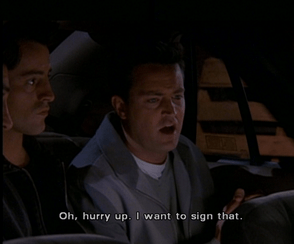
In this article, I take irony in its broad sense, as including sarcasm, jocularity, understatement and hyperbolic expression. I account for how Chandler’s sarcastic intentions are communicated and understood as sarcastic using echoic mention theory, pretence theory, and ironical understatement, with a particular focus on prosodic and nonverbal cues to his sarcasm, namely deadpan intonation, contrastive stress, and hyperbole.
🥁 I will be presenting my next paper on the prosodic and nonverbal cues to Chandler Bing’s sarcasm at the XI International Symposium on Intercultural, Cognitive and Social Pragmatics in May 2024, as part of the panel Beyond Meaning: the relevance of ineffable contents, from the procedural to the affective, alongside my fellow academics: Louis de Saussure (Uni. of Neuchâtel), Elly Ifantidou (National and Kapodistrian Uni. of Athens), Anna Piata (National and Kapodistrian Uni. of Athens), Chara Vlachaki (Uni. of Brighton), Stavros Assimakopoulos (Uni. of Malta), Didier Maillat (Uni. of Fribourg), Barbara Konat (Adam Mickiewicz Uni., Poznan), Victoria Escandell-Vidal (Complutense Uni. of Madrid), Julia Langkau (Uni. of Geneva) and Ismaël Pozner (Uni. of Neuchâtel). What a terrific international team!

“Could we BE more white trash?”: Prosodic and nonverbal cues to Chandler Bing’s sarcasm: where relevance theory and conversation analysis meet
Abstract: This paper shows how complementary relevance-theoretic pragmatics and conversation analysis can be when it comes to understanding the use and comprehension of sarcasm in interpersonal communication. In this paper, I analyse the pragmatics of sarcastic irony in the voice of TV sitcom F.R.I.E.N.D.S’s iconic Chandler Bing, the so-called ‘king of sarcasm’. The challenge of pragmatics is to account for how a speaker’s ironical intentions are communicated and understood as ironical. It is also to explain what makes particular expressions of attitude sarcastic. In the light of relevance-theoretic claims on verbal irony and sarcasm specifically (Sperber and Wilson, 1981, 2012), I show how prosodic cues, including contrastive stress (Scott, 2021; Madella, 2023) and some of Chandler’s – and Matthew Perry’s – unique intonation patterns, cadences and nonverbal behaviours all play an integral part in understanding Chandler’s sarcastic intentions. As I demonstrate, the speaker does more than just ‘make as if to say’ – Grice’s phrase (1967/1989); he ‘acts as if to be’. More specifically, I point out to how the speaker’s dissociative attitude towards the proposition expressed may lead to a more nebulous interpretation, one that is hard to pin down in procedural and conceptual terms (Wharton, 2009, 2016). From a conversation analysis perspective, this paper also looks into how Chandler’s sarcasm resonates with what Haugh (2010, 2014) describes as an act of ‘jocular mockery’, characterised by either ‘taking the piss’ (Goddard, 2009), deadpan jocular irony, or verbal and non-verbal imitation and impersonation. While it can be evaluated as threatening to the face of his addressee(s) and to the relationship of those interacting, Chandler’s sarcasm can also be evaluated as ‘supportive of their relationship’ (Haugh, 2010) as F.R.I.E.N.D.S.
In those sarcastic instances, where Chandler does not commit to a single interpretation but rather offers a diffuse impression, it is hard to pinpoint exactly what it is that is being expressed, and yet we understand his intentions. It involves attending to a number of paralinguistic as well as linguistic cues and a great amount of inferential reconstruction. In my research, I urge language practitioners, second language practitioners specifically, to expose the language learner to those instances of expressive communication, which are ‘descriptively ineffable’ (Blakemore, 2011), and where attention to paralinguistic stimuli is key to understanding the speaker’s intended effects.
🥁 On a rather different note, I am also working collaboratively with one of my former students on turning her brilliant dissertation into a paper for the Journal Corpus Pragmatics on the pragmatic and stylistic footprints of online child sexual groomers and the recurrent patterns of their manipulative discourse. Stay tuned.


Leave a comment